
Traditional email marketing metrics are becoming harder to trust.
Open rates are inflated. Clicks are distorted. In fact, our internal data shows 30–40% of email engagement can come from bots, not real recipients.
And while we’ve built tools to filter out bot traffic and show real engagement, they still don’t answer the one question that matters most for ecommerce businesses:
Which emails are actually making you money?
That’s why we built something new.
Introducing Revenue Attribution for Automation
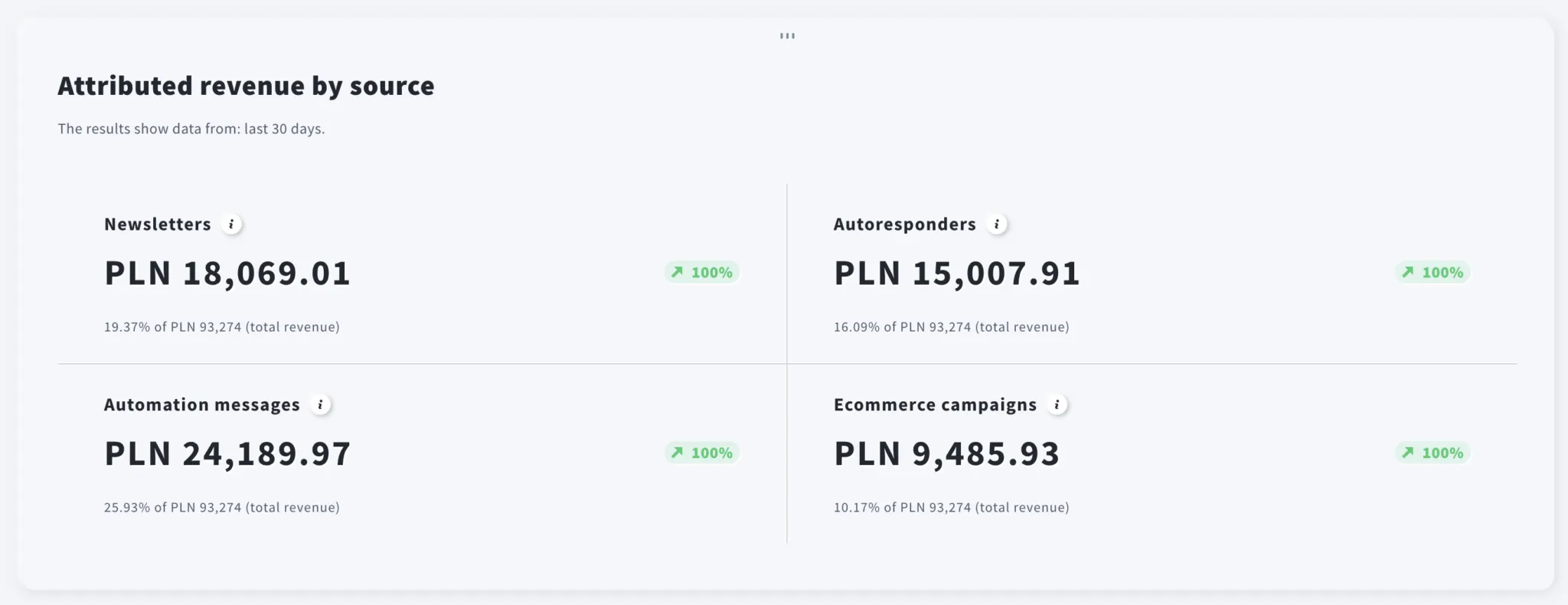
Ever wondered how much revenue your welcome emails, abandoned cart reminders, or post-purchase flows actually generate? Now you can see exactly how much email marketing contributes to your bottom line – and not just individual sales promos. This includes the entire customer journey:
- Automation workflows (new)
- Autoresponders (new)
- Ecommerce campaigns
- Newsletters
For the first time, you get a complete view of your email ROI, not just a partial one.
Why this matters
For years, measuring email performance has relied on proxy metrics. Opens showed interest. Clicks suggested intent. Conversions were often estimated or disconnected from the emails that drove them.
We’ve tracked this closely in our annual Email Marketing Benchmarks report. And what the data shows is striking: average open rates jumped by over 12 percentage points between 2023 and 2024, while click-throughs grew too – numbers that look like a breakthrough in engagement. But as the report itself notes, part of that growth can be attributed to developments like the Apple’s Mail Privacy Protection, which generates automatic opens that distort the data.
In other words, the metrics were getting harder to trust even before we started talking about bots.
But even setting that aside, this approach had a more fundamental limitation: it never showed the full picture.
Because most revenue doesn’t come from one-off campaigns. It comes from the automated journeys running quietly in the background – welcome flows, abandoned cart sequences, post-purchase follow-ups, re-engagement emails. Until now, much of their impact has been difficult to measure.
Related: Understanding email marketing metrics
What you can see now
With Revenue Attribution, you can connect your emails directly to the revenue they generate – across every message type in GetResponse.
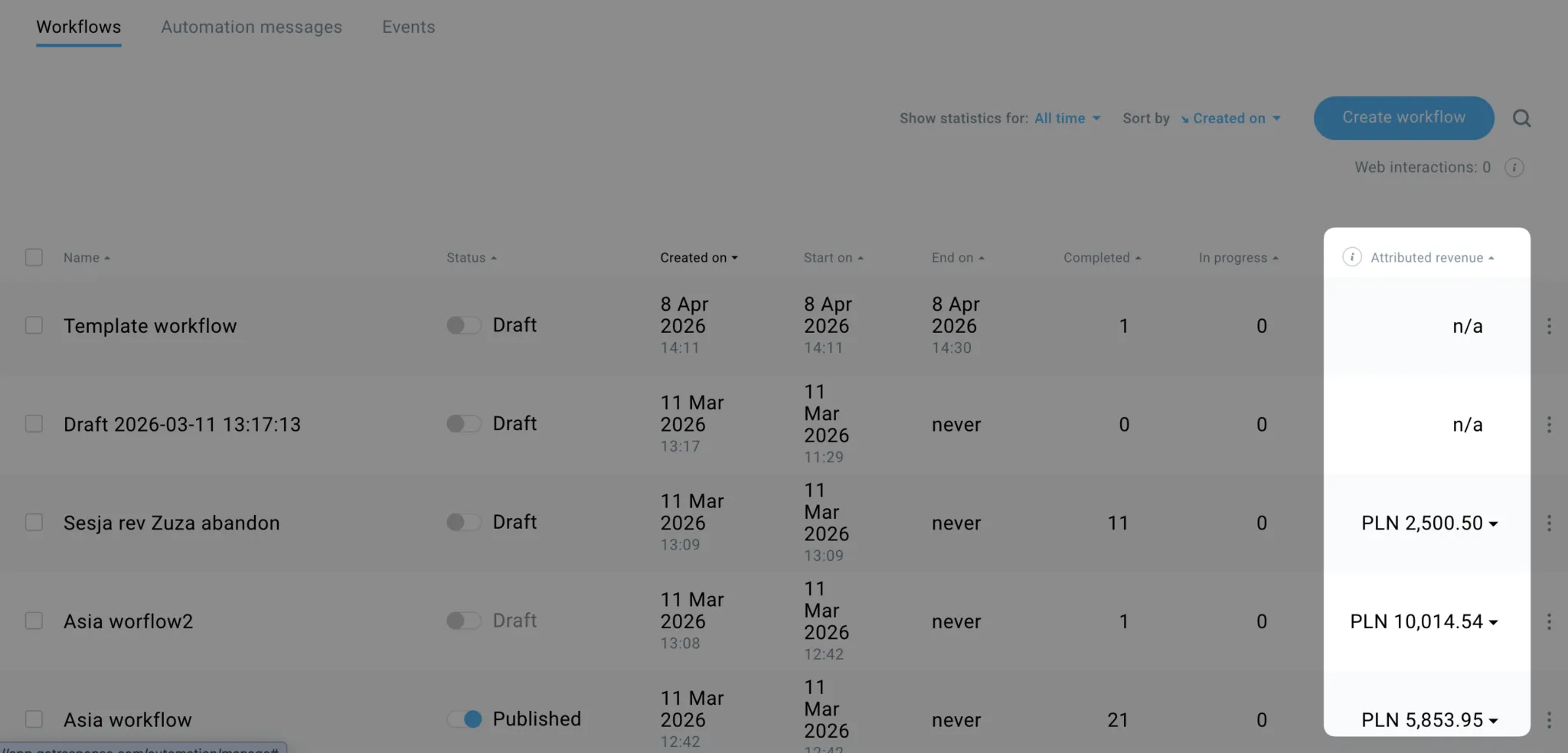
In your Automation dashboard, each flow now shows an Attributed revenue column, giving you the total revenue generated by all revenue-tracked messages in that journey at a glance.
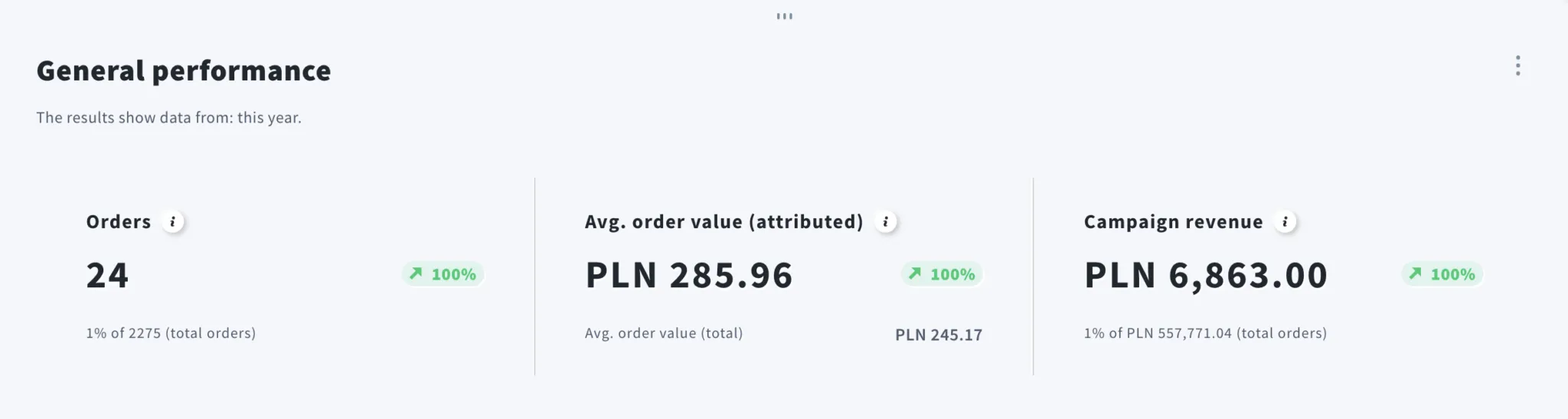
In Reports, you can go deeper. Select any newsletter, automation, or autoresponder and scroll to the Attributed revenue section to see three numbers that actually matter: total attributed revenue, number of orders, and average order value.
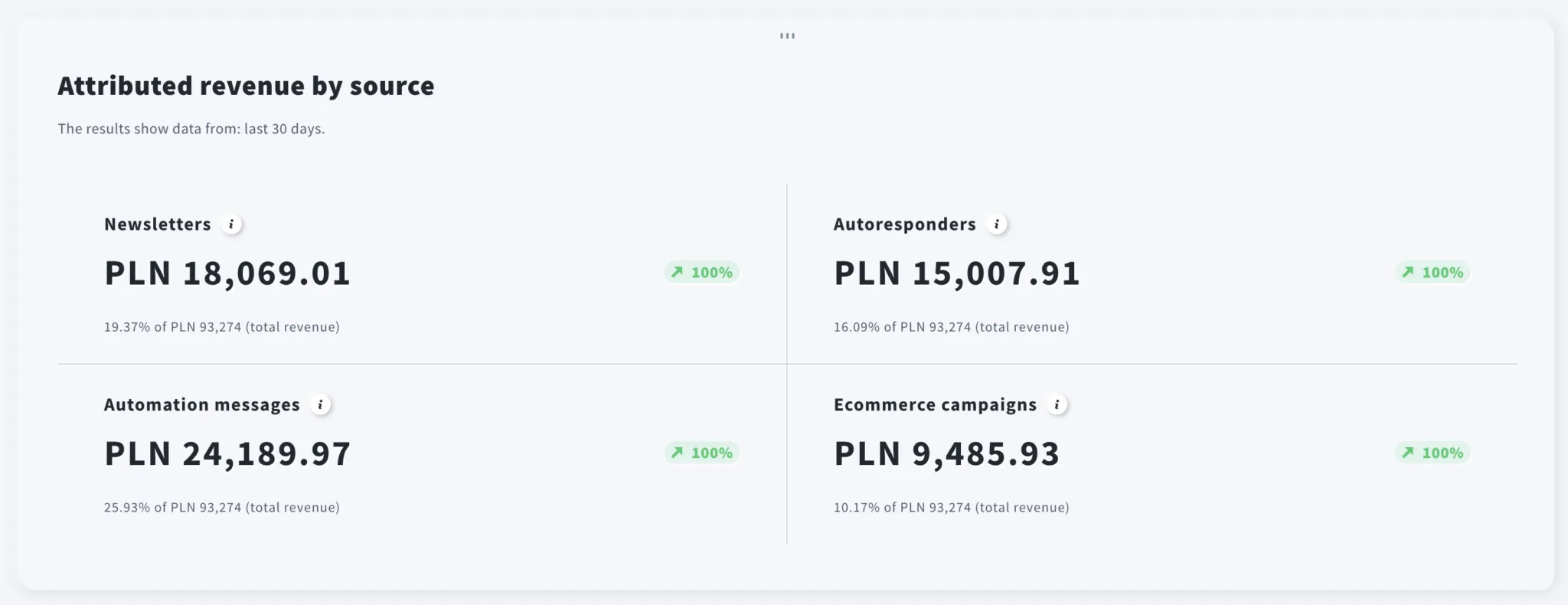
In Reports > Ecommerce, you get the broadest view: attributed revenue across all your email activity, broken down by message type, alongside your overall store performance. Here you can also track attributed revenue trends over time and see how your email-driven orders compare to total store orders.
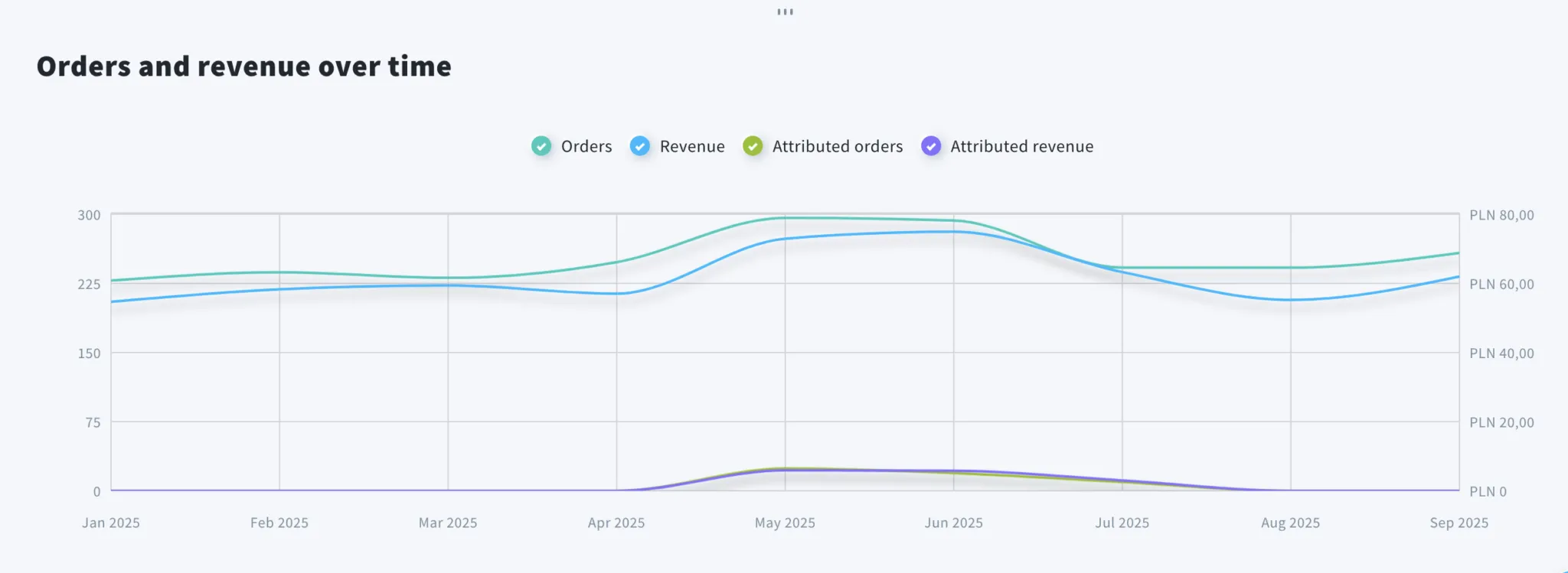
And it works with all GetResponse ecommerce integrations – no additional setup beyond enabling the toggle per message.
For a full breakdown of available metrics, see Understanding Ecommerce Reports in GetResponse.
How it works
Revenue attribution in GetResponse is built around a simple principle: when a customer clicks a link in one of your emails, a timer starts. Any purchase they make before that timer runs out gets credited to that message.
That timer is called the attribution window. By default it’s set to 5 days, but you can adjust it under Tools > Ecommerce tools > Settings to better reflect your own sales cycle. A store selling impulse purchases might close the window sooner. A store with longer consideration periods might extend it.
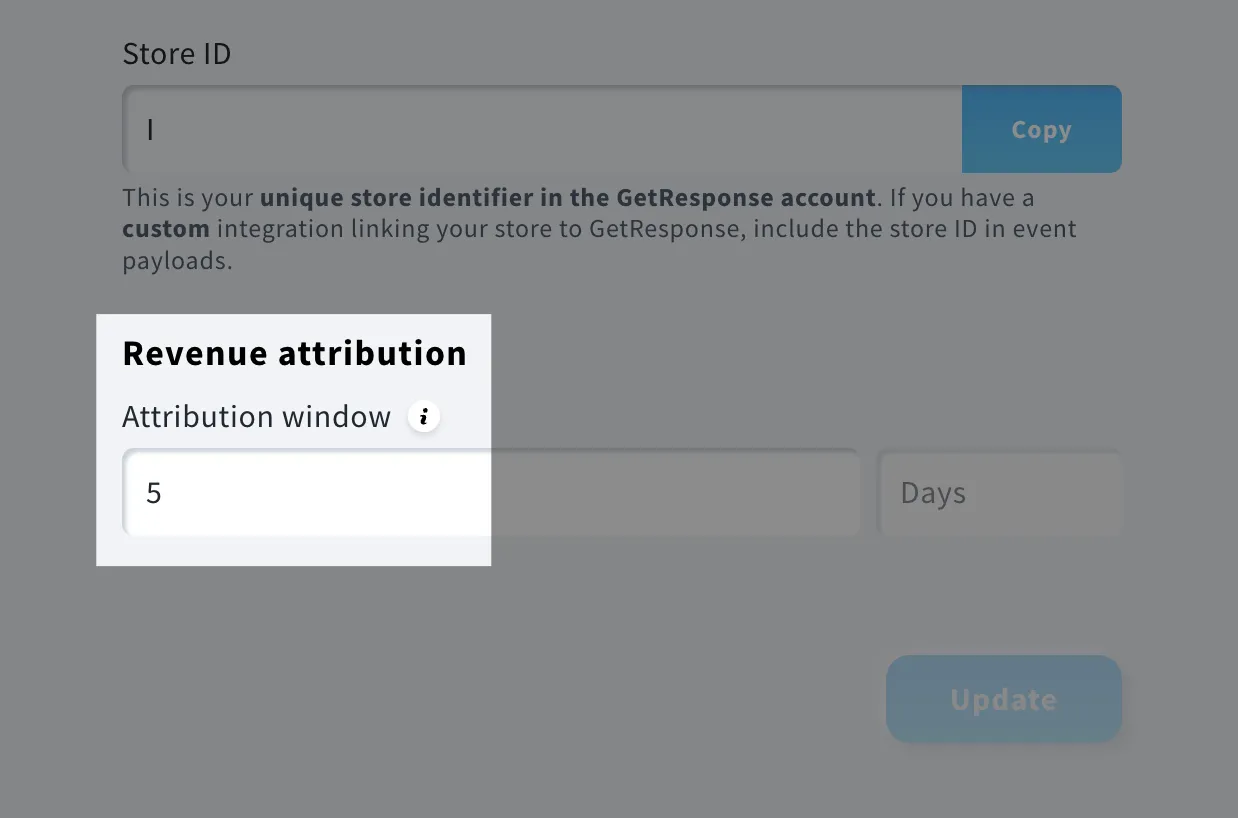
A few things worth knowing about how attribution is calculated:
It uses a last-click model. If a customer clicks multiple emails before buying, the revenue goes to the most recent one. So if someone clicks your welcome email on Monday and your abandoned cart reminder on Wednesday, then buys on Thursday – the cart reminder gets the credit.
A new click resets the window. Each time a customer clicks a link in a new message, a fresh attribution window opens and the previous one closes. There can only be one active window per customer per store at any given time.
Only paid orders count. Pending, cancelled, or refunded orders are excluded. The revenue you see is real, completed transactions only.
It works with all GetResponse ecommerce integrations. No additional configuration is needed beyond enabling the toggle on individual messages.
That’s the mechanics. Here’s what it looks like when it’s actually running.
For full technical details, see What is Revenue Attribution and how does it work?
What this actually changes
Revenue attribution becomes most valuable when you look at real customer journeys – the moments where purchases actually happen.
Until now, those journeys were difficult to measure with precision. You could see that a purchase happened, but not always which message influenced it, especially when multiple emails were involved.
With attribution in place, those journeys become much clearer.
Understanding what drives the first purchase
Consider a typical welcome flow.
A new subscriber joins your list and receives a sequence of emails over a few days. Somewhere along that journey, they decide to make their first purchase.
Before, it was difficult to pinpoint what made the difference. Unless the customer used a discount code immediately, the connection between a specific email and the purchase was often unclear.
Now, you can see exactly which message led to that first conversion and how much revenue it generated – giving you a clearer picture of how your welcome flow performs, and whether adjusting the sequence or adding messages could increase its impact.
Measuring the real impact of cart recovery
Abandoned cart emails are widely recognized as high-performing, but their impact isn’t always evenly distributed across the sequence.
A customer might receive multiple reminders before completing a purchase. Without attribution, it’s difficult to know which message actually closed the sale.
With revenue attribution, you can see how much revenue each message in the recovery sequence generates, as well as the total value of the workflow – making it easier to refine timing, messaging, and structure based on what’s actually driving conversions.
Measuring long-tail revenue
Post-purchase and re-engagement automations are two areas where impact is consistently underestimated – and where attribution data tends to surprise people.
Post-purchase flows drive repeat purchases through product recommendations, cross-sell offers, and follow-ups. Re-engagement campaigns bring dormant subscribers back into the buying cycle. Both play an important role in customer lifetime value. But without attribution, their contribution has been largely invisible.
Now you can see which messages lead to repeat purchases, which re-engaged customers actually convert, and how much revenue each workflow generates over time. That’s what makes it possible to evaluate these flows on their actual merit – not just on open rates or click activity.
Read more related content:
Abandoned cart email examples and best practices
How your emails perform where it matters most
What all of these scenarios have in common is that they move beyond isolated metrics and focus on complete customer journeys.
Instead of looking at individual campaigns in isolation, you can now understand how different messages contribute to revenue across the entire lifecycle – from first touch to repeat purchase.
Not just more data. Finally, the right data.
How to enable revenue attribution in GetResponse
Turning it on takes seconds. Inside any automation message, autoresponder, or newsletter, go to the message settings, scroll to the Tracking section, and enable the Revenue Attribution toggle. Once it’s on, that message will start tracking revenue.
To adjust the attribution window from the default 5 days, go to Tools > Ecommerce tools > Settings and change the number of days to better reflect your sales cycle.
For a step-by-step walkthrough, see How to track revenue in your automation workflow.
Start seeing what your emails actually earn
If you’re already a GetResponse customer on the Marketer plan or above with a fully configured ecommerce integration, you can enable revenue attribution today – no additional setup required. Log into your account, open any email, head to the Tracking section in message settings, and turn on the toggle.
Not on GetResponse yet? Start your free trial and see what your emails are actually worth. Revenue attribution is available on the Marketer plan and above – and works with all GetResponse ecommerce integrations.
