
An ecommerce strategy is the roadmap that defines how you will create and scale your online store. It includes the tech you will use and the marketing strategies that will hopefully attract and retain customers.
But building an ecommerce store is the easy part. You can set up your online store in an afternoon, thanks to platforms like Shopify.
Growth is a different game entirely.
Ecommerce stores lose an average of $29 for every new customer they acquire. Acquisition costs have increased by a shocking 222%! This means repeat purchases and retention are crucial for an online store to break even.
For this article, we spoke with two ecommerce growth strategists to understand the tactics they see driving growth in 2026.
Key takeaways
- An effective ecommerce strategy focuses on customer retention to drive sustainable growth.
- Before implementing any ecommerce growth strategy, make sure your product works as intended, configure your attribution system correctly, and streamline the checkout process.
- Top ecommerce growth drivers include partnering with creators, optimizing paid ads for high-value customers, and leveraging order confirmation emails to cross-sell products.
- Retention techniques like personalized post-purchase campaigns, subscription services, and tiered customer loyalty programs also support sustainable ecommerce growth.
- GetResponse ecommerce tools use first-party data from your store to deliver personalized campaigns. The solution supports automated post-purchase campaigns, including personalized product recommendations.
What to do before building your ecommerce marketing strategy
Even the best ecommerce growth strategy will struggle if certain fundamentals are broken. Review the following before pouring your budget into the next Meta ad or influencer marketing campaign:
A. Investigate the product
Marketing accelerates whatever is true about your product.
If the product works as intended and delivers the promised results, a good growth strategy amplifies those strengths. It makes more people aware of the product, which drives more word-of-mouth and referrals.
The opposite is also true.
Your e-commerce marketing strategy will only make more people aware of your product’s shortcomings if it doesn’t deliver on its promise. That leaves you dealing with chargebacks, returns, and a mountain of one-star reviews.
That’s why Andra Baragan, the founder and CRO strategist of Ontrack Digital, recommends starting by investigating the product.
She explains, “The first thing is to understand what the actual struggle is. If the product is poor quality or doesn’t do what it says it does, definitely fix that.”
B. Understand your customers deeply
Next, you want to create a customer profile describing your best customers.
Hopefully, you already have enough data to know the type of customers who spend the most with your brand, with few to no chargebacks. Customers who keep on coming back.
You want to know where these customers hang out, what their typical objections are, and their goals when they spend on your products.
These insights tell you where to direct your growth resources. It shows you the sales channels and traffic types to deprioritize so you can have the extra budget to go after your most valuable customers.
C. Set up technical tracking
When a customer clicks an ad and places an order on your store, Google Analytics 4 and Meta Conversion API (CAPI) are supposed to attribute that sale to the ad click. Several issues arise when there’s a problem with that attribution.
Ad platforms use the conversion data to optimize targeting. If a significant percentage of conversions are not accurately attributed to the ad clicks, the algorithms can end up targeting the wrong audiences. That results in an even lower ROI.
Jack Paxton, the founder of Top Growth Marketing, explains that “across our audits, missing or broken CAPI tracking accounts for a 15–30% attribution loss.”
Check that the Meta CAPI is installed correctly and that GA4 is recording conversions and other key events. The numbers from Meta should align with your GA4 data.
Accurate tracking makes sure ad platforms know what campaigns and audiences are driving revenue. It also allows you to make informed decisions on what to scale.
D. Audit the mobile shopping experience
Mobile accounts for 76% of ecommerce website visitors. In Europe, nearly 50% of all ecommerce transactions now happen on mobile devices.
Is your online store optimized for mobile commerce?
Your ecommerce site should load in under two seconds on mobile devices. You lose revenue with every extra second your site takes to load on a smartphone.
Jack Paxton saw this firsthand in one client where conversion rates dropped suddenly by 20%. A technical performance audit showed that a newly installed third-party Shopify app added 3-4 seconds to the site’s mobile time to first byte. Uninstalling the app restored the site speed and returned conversions to baseline.
Mobile optimization also involves simplifying the checkout experience. Keep the form fields to a minimum. In addition, optimize images for mobile viewing and build a thumb-friendly navigation experience.
E. Eliminate checkout friction
When a potential customer clicks an ad, adds items to their cart, and initiates checkout but leaves before placing an order, you’ve paid the acquisition fee without getting anything in return.
No amount of growth hacking will deliver sustainable growth when you have such a leak.
Review your checkout flow to identify and remove any barriers that slow down or frustrate potential customers. Don’t force account creation and make sure to provide various payment options.
Express checkout, like Apple Pay and Shop Pay, as well as Buy Now Pay Later (BNPL), can also lift your conversions. They help you get more customers from the same website traffic, which effectively lowers your CAC.
F. Establish a baseline
A baseline shows you the impact of every fix and strategy you deploy.
Record your current conversion rate, CAC, LTV, AOV, cart abandonment rate, and repeat purchases.
Understand your current LTV:CAC ratio and track how it changes as you implement new strategies. This crucial metric will tell you whether your ecommerce marketing strategy is actually growing your business.
As Jack Paxton explains, “Understanding your ratio of Lifetime Value to Customer Acquisition Cost ensures you are actually growing profitably, not just buying empty revenue.”
For cart abandonment, it’s also vital to understand the customer behavior behind abandonment.
“One funny thing I keep noticing ecommerce users do is that they use the cart as a wishlist sort of thing – they add everything to the cart, keep it for later, and then compare and decide what they want to buy.” That’s according to Andra Baragan.
Customers using their carts as a wishlist or to compare products can easily skew your cart abandonment rate. That’s why brands like ASOS have a separate feature that lets customers add products to their wishlists.
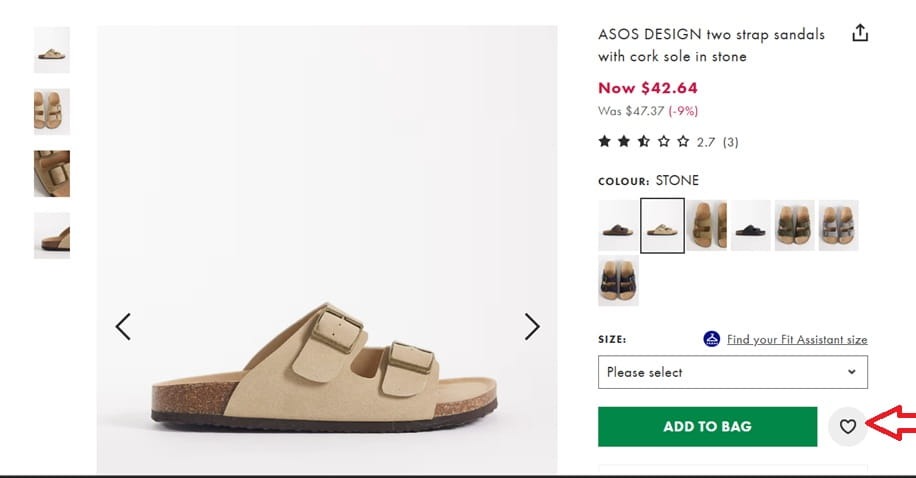
You may need to introduce a similar feature if you notice the same pattern with your target audience.
6 strategies ecommerce growth experts are using in 2026
Here are six growth marketing strategies to build a profitable ecommerce business.
Growth strategies for customer acquisition
1. Optimize paid ads for high LTV customers
Paid advertising is one of the most effective ways to drive targeted traffic to your ecommerce website.
But successful paid advertising campaigns are not optimized for traffic. They aren’t optimized for the lowest cost per click, either.
Advertising platforms will gladly give you cheap traffic if you optimize for lower CPC and CPMs. But what value is cheap traffic if it doesn’t generate meaningful revenue for your store?
The better strategy is to optimize your ads for high LTV customers. It may cost more to drive these customers to your store, but they’ll spend more and stick with your brand for longer.
Go back to the customer profile you created earlier. Use their attributes in the targeting options to tell advertising platforms who should see your ads.
Additionally, feed the advertising platforms with value-based data. So, instead of just tracking “conversion” events, set up Meta’s CAPI to receive additional data like order value and repeat purchase.
Meta’s offline conversion API lets you feed the platform LTV and repeat purchase data days or weeks after the first sale. And once you have enough data, you can create value-based lookalike audiences.
That data helps Meta’s algorithm optimize your ads to target customers who are likely to spend more with your brand. It doesn’t just focus on the first conversion.
Lastly, complement your paid channels with owned media. Use paid advertising to win your first sale and build your email and SMS lists. Then, use email and SMS campaigns to attract repeat customers.
2. Partner with creators
Traditional influencer marketing involved identifying an influencer, paying them upfront, and having them create content for your store. Your brand took a risk every time it partnered with an influencer because the results were not guaranteed.
Creator affiliate marketing, the TikTok Shop affiliate marketing program in particular, fixes that problem.
List your products on the TikTok Shop affiliate marketplace. Creators request samples and produce shoppable video content around your product. And you only pay the creators a commission when a sale happens.
This is beneficial because you don’t incur any upfront sponsorship fees. It’s one of the fastest-growing ecommerce trends.
Additionally, great shoppable content compounds over time.
Paid ads stop generating clicks and revenue the moment you stop paying. Affiliate creator content compounds like organic content. One shoppable video can continue to generate revenue for several weeks and months after posting.
The brand Sachecu Beauty reportedly generates 90% of their sales through TikTok creators.
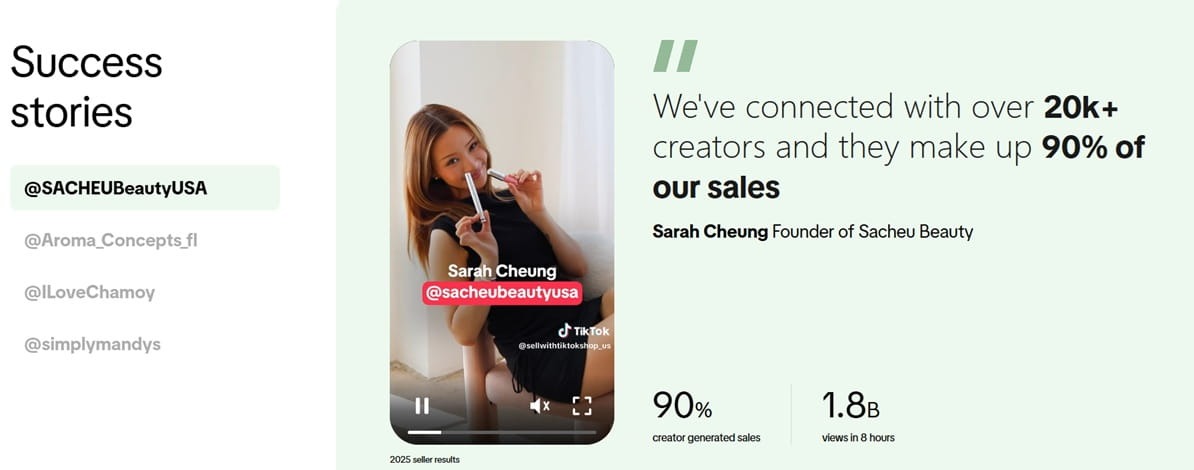
The performance-based setup incentivizes creators to make more content. This builds brand awareness even further. It also gives you a large pool of user-generated content you can repurpose for your product pages, social media campaigns, and paid ads.
Growth strategies for boosting CLV and AOV
3. Use order confirmation emails as a marketing asset
Customers expect order confirmation emails every time they place an order. These emails have a consistently high open rate. That’s why they can be an invaluable marketing asset.
The email should start by addressing its main objective. Confirm your store has received the order, provide an order summary, and issue a digital receipt.
With that out of the way, use the order confirmation email to cross-sell other relevant products.
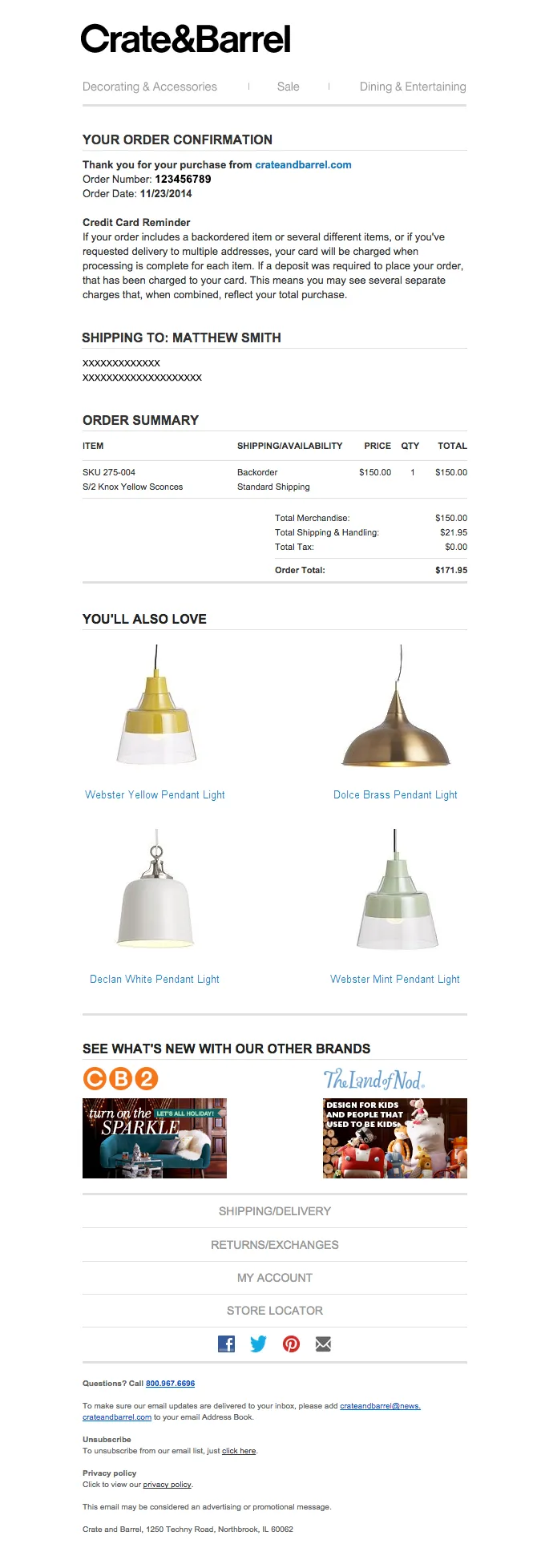
Jack Paxton redesigned a client’s confirmation emails to include two personalized product recommendations. The campaign had a massive impact. They saw an “immediate lift in Average Order Value (AOV) and shortened the window for their second purchase.”
Brands like Crate & Barrel use the same strategy.
4. Introduce subscriptions
The goal of an ecommerce subscription is to make repeat purchases effortless. It eliminates the decision-making and re-ordering process every time customers want to replenish their favorite products.
A good ecommerce subscription business model gives customers additional benefits beyond convenience. Customers expect more value in exchange for their loyalty.
Exclusive discounts, early access to new products, and free shipping are additional incentives every ecommerce business owner should use to encourage more customers to subscribe to recurring shipments.
While subscriptions may lower the average order value per transaction, they boost LTV and help you generate more predictable revenue.
According to a report by Recharge, subscribers placed 3X more orders than one-time shoppers across the 20,000 brands using its subscription platform.
Here are the three ecommerce subscription business models you could offer in your store:
- Replenishment – This is ideal when customers buy the same product on a predictable cadence. Think coffee, vitamins, and pet food.
- Curation boxes – This covers the same product category but with different product selections every cycle. For example, Atlas Coffee Club delivers a new curated box of coffee selections to its customers each month.
- Access – Customers pay a monthly subscription fee to access exclusive benefits. They may get members-only pricing and free express shipping, for example. Costco is a classic example of this.
Whatever subscription model you choose, it’s important that your customers don’t feel trapped. Make it easy for them to edit, pause, skip, or cancel their subscription.
Additionally, track customer progress and reward customers when they hit significant milestones.
For example, customers can receive special rewards or unlock new perks at the six-month mark. This drives continued loyalty to your brand and the subscription program.
Growth strategies for customer retention
5. Use post-purchase email sequences
The first sale marks the beginning of the customer retention journey. And yet the only communications most brands care about are thank-you and cart abandonment sequences.
As Jack Paxton notes, “Brands ignore retention because they are addicted to the dopamine hit of top-of-funnel acquisition, but the real profit margins are made in backend retention.”
Create several post-purchase email sequences to engage your shoppers at key touchpoints during their customer journey. These communications are crucial for future growth.
Send your customers a product education email several days after their purchase. Check in again 7-10 days later. Ask them about their customer experience and request a review.
Replenishment reminders are another value-driven email sequence you should add to your post-purchase campaigns.
And when it’s time to promote new products or your offers, make sure they’re personalized. Send personalized product recommendations and offers based on the exact SKUs each customer bought from your store.
GetResponse’s automation builder helps you create workflows for each of these sequences. You can choose from our wide variety of prebuilt automation workflows or create your own from scratch with our drag-and-drop builder.
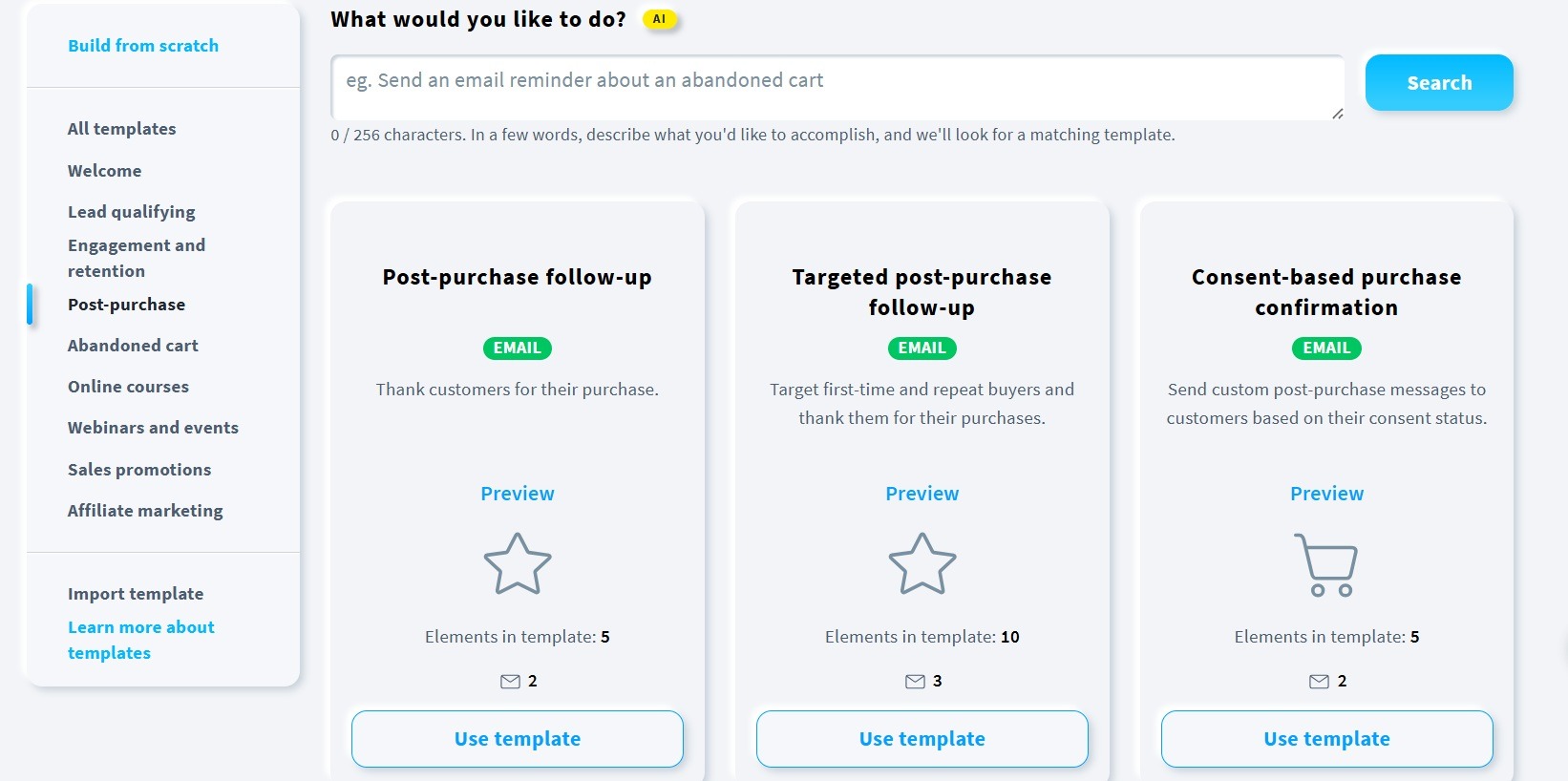
GetResponse integrates with major e-commerce platforms to track the products your customers buy, what they interact with, and how they engage with your emails.
That data is used to personalize every email with curated AI-powered product recommendations. These emails increase sales and average order value by up to 10% and 33%, respectively.
6. Implement a tiered customer loyalty program
A tiered customer loyalty program gives customers a reason to deepen their relationship with your brand. Instead of receiving a standard reward for their loyalty, customers unlock more perks every time they hit a new milestone.
This motivates customers to spend and buy more frequently to unlock new rewards. At the same time, the most loyal customers feel valued and recognized by gaining access to exclusive benefits.
Skincare brands like Sephora use such loyalty programs.
In addition to encouraging brand loyalty, these programs also boost customer lifetime value and the average order value. According to the State of Customer Loyalty report, 64% of loyal customers repurchase from their favorite brands every month.
Unfortunately, our studies also uncovered that while most marketers report that they split their budgets evenly between acquisition and retention, repeat buyers don’t feel that way. 67.3% of customers said that brands valued new customers more than existing ones.
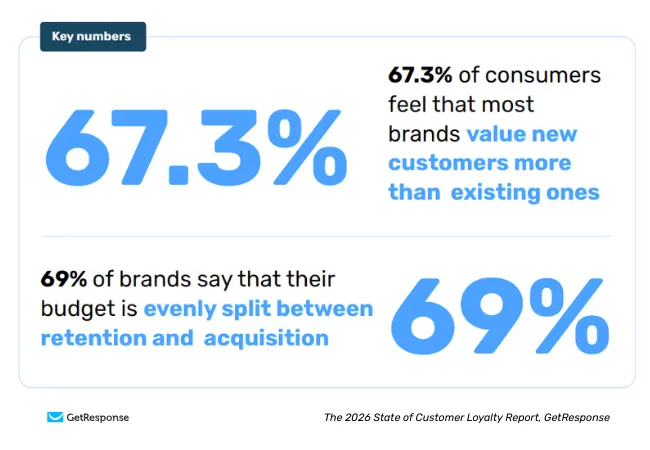
The disconnect is mostly due to poor communication. The perks for new customers, like welcome discounts, are well communicated.
You should do the same thing with your retention strategies.
Clearly communicate the incentives for repeat purchases. And don’t make the loyalty perks hard to achieve.
Grow your ecommerce business with GetResponse Automation
Successful ecommerce businesses put as much effort into retention as they do into acquisition. Acquisition fills your funnel at the top. Retention is what unlocks sustainable growth.
Create a cohesive ecommerce strategy that delivers a consistent experience, guiding shoppers through the customer journey, from acquisition to loyalty and brand advocacy. Make sure all your digital marketing efforts, from paid advertising and content marketing to search engine optimization and email marketing, talk to each other.
Analyze data from existing customers to identify your VIP buyers and the marketing channels they come from. Use that data to enhance your marketing efforts and attract more high LTV customers.
Beyond the first sale, nurture long-lasting customer relationships through personalized post-purchase content.
GetResponse’s ecommerce tools can help you with that. Our solution connects to your online business and tracks how customers behave on your site. It records their browsing and purchase history.
The automation solution then uses that data to deliver personalized email and SMS campaigns.
Talk to our team today to see how GetResponse can grow your e-commerce store.
Frequently asked questions about ecommerce strategy
What is an ecommerce strategy?
An ecommerce strategy is a roadmap for launching, marketing, and scaling an online store. It defines the technology, acquisition channels, conversion tactics, retention programs, and performance metrics a business will use to attract customers and grow profitably.
What should you do before implementing ecommerce growth strategies?
First, confirm that the product delivers on its promise. Then identify your highest-value customers, configure GA4 and Meta’s Conversions API correctly, audit the mobile shopping experience, remove checkout friction, and record baseline metrics so you can measure the impact of each change.
What are the best ecommerce growth strategies for 2026?
Six expert-backed strategies are: optimize paid ads for high-LTV customers, partner with affiliate creators, cross-sell in order confirmation emails, offer subscriptions, build personalized post-purchase email sequences, and implement a tiered customer loyalty program. The right mix depends on your product, audience, margins, and customer data.
How can ecommerce businesses reduce customer acquisition cost?
Ecommerce businesses can lower CAC by improving mobile speed, simplifying checkout, offering convenient payment options, targeting customers with higher lifetime value, and turning paid traffic into owned email and SMS audiences. Better conversion and retention generate more revenue from the same acquisition spend.
How can an online store increase customer lifetime value?
Increase LTV by making repeat purchases easier and more rewarding. Use personalized post-purchase emails, replenishment reminders, relevant product recommendations, subscription options, and tiered loyalty benefits based on each customer’s purchases and engagement.
Which ecommerce metrics should a business track?
Track conversion rate, customer acquisition cost (CAC), customer lifetime value (LTV), average order value (AOV), cart abandonment rate, and repeat purchase rate. Monitor the LTV:CAC ratio as a profitability signal and compare every experiment with your baseline.
