
69% of brands report splitting their budgets evenly between customer acquisition and customer retention. But what’s ironic is that 67.3% of customers feel that most brands value new customers more than existing ones.
That gap creates a real problem. Your brand may focus on customer retention as much as customer acquisition, but do your customers actually feel that way? If they don’t feel recognized, your retention strategy isn’t working as intended.
And ineffective customer retention means you’ll struggle to grow your business.
This article explores the roles of customer acquisition and retention in business growth. We’ll tell you how the two are similar and what their key differences are.
Key takeaways
- Customer acquisition focuses on customers in the early stages of their journey to drive the first purchase, while customer retention nurtures existing customer relationships to boost loyalty.
- Customer acquisition is generally more expensive and has a lower ROI than customer retention because it relies on rented pay-to-play platforms. Increasing ad costs and competition also make acquisition costly.
- Successful businesses must balance acquisition and retention to drive growth. Acquisition grows your customer base, while retention optimizes the CLV.
- The lifecycle marketing automation solution from GetResponse helps you nurture customer relationships by automating the customer journey. The solution provides workflows that respond to individual customers’ actions to deliver a personalized customer experience.
What is customer acquisition?
Customer acquisition is the marketing process brands use to find and attract new customers.
Acquisition helps with filling the funnel and sales pipeline.
It involves both paid and organic efforts like paid advertising, influencer marketing, search engine optimization, referrals from existing customers, and social media marketing.
One costly mistake brands make is looking at customer acquisition in isolation. Marketing and sales teams focus on winning that first sale at all costs, even if it means attracting the wrong customers.
That happens when your team focuses on the wrong metrics. Think lowering customer acquisition costs instead of optimizing for customer lifetime value.
Retention will always suffer if you keep attracting the wrong customers. And growth becomes impossible if you can’t retain existing customers.
That’s why customer acquisition efforts should read from your retention data. What customer profiles spend and stick with your brand the most?
Those are your best customers.
The best customer acquisition strategies focus on attracting the right customers who get the most value from your products and have a high LTV. The acquisition and retention costs of these customers may be high, but they have a better CAC payback and are easier to retain.
What is customer retention?
Customer retention is the process of keeping existing customers to encourage repeat purchases. It involves nurturing customer relationships to remain top of mind and keep customers coming back to your store.
Businesses use different customer retention strategies to encourage brand loyalty. Value-driven post-purchase email sequences, subscription boxes, customer loyalty programs, and proactive customer support are all good retention strategies.
Now, while both customer retention and customer acquisition are crucial for sustainable growth, resource allocation is not always straightforward.
Should you direct more of your resources towards retention or acquisition?
Consider the nature of your product and the customer purchase behavior when balancing your acquisition and retention resources.
If your products are something customers need to buy frequently, prioritizing retention is the most strategic move. Items like pet food and skincare products fall under this category.
As we are going to see, retention is much cheaper than acquisition, so you’ll generate more revenue at a much lower cost. This eases the pressure on CAC.
On the other hand, consider a mattress business where customers buy the product once every decade or so. In such a business, you may need to prioritize customer acquisition to drive growth.
That’s why a brand like Casper needed to innovate beyond mattresses and turn into a sleep solution company to increase customer lifetime value.
They also redirected retention efforts towards referrals. So instead of looking at retention to drive repeat purchases (which were infrequent due to the nature of their product), they aimed to grow referrals from existing customers. This gave them an extra growth channel, beyond paid ads, and helped lower their CAC.
Customer acquisition metrics
Track the following metrics to gauge the performance of your customer acquisition efforts:
- Conversion rate – This is the percentage of visitors or leads who complete a purchase on your store. A high conversion rate is good, but take note of any aggressive discount promotions that can inflate this number at the expense of your margins.
Track conversion rates by channel, customer type, and campaign to see what efforts produce the highest conversions.
- Customer acquisition cost – This measures how much it costs to acquire a new customer.
As mentioned earlier, don’t over-optimize for the lowest CAC. Instead, evaluate CAC alongside the CAC payback period and CLV. That gives you a clearer picture of the profitability of your customer acquisition efforts.
- CAC payback period – This measures how long it takes for the margins from a new customer to cover their acquisition cost.
A slightly higher CAC is usually understandable if the payback period is short.
- Cost per acquisition by channel – This metric examines how much it costs to acquire customers through the different marketing channels. It helps you identify the most efficient channels.
Look at the customer quality coming from each channel. Going after the cheapest channel is not worth it if it brings customers with a high churn rate or chargeback requests.
- Return on ad spend – ROAS shows the revenue generated from every dollar spent on paid advertising. A high ROAS is great as long as it’s not driven by heavy discounts that eat into your margins.
Separate ROAS for new customers and existing customers to determine whether your campaigns are effective at generating incremental growth.
Customer retention metrics
Here are the metrics that matter for customer retention:
- Customer retention rate – This shows the percentage of customers who continue to buy from your ecommerce store over a given period.
Ideally, you want a high retention rate accompanied by a consistently good average order value. This shows that customers get real value from your brand and its offerings.
- Repeat purchase rate – The percentage of customers who make another purchase after their initial order within a given period.
Unlike customer retention rate, which looks at the entire customer base, repeat purchase rate shows how many first-time buyers return to your store.
Segment repeat purchase rate by customer cohort, product category, and marketing channel to see where most repeat customers come from.
- Customer lifetime value – CLV tells you how much revenue a customer generates throughout their relationship with your brand.
Calculate the customer lifetime value regularly as your customer cohorts mature. Monthly works best for product categories with a high purchase frequency. Quarterly is ideal for mid- to low-frequency categories.
- Net revenue retention – This metric is ideal for subscription ecommerce businesses. It shows the revenue retained from existing customers after a given period of time.
- Churn rate – For a subscription ecommerce business, customer churn rate shows the percentage of customers who cancel the subscription service. It shows whether there is product-market fit for your subscription service.
- Net promoter score – NPS shows how likely existing customers are to recommend your brand to others. It signals customer satisfaction and brand advocacy.
- Customer retention cost – This measures how much you spend to retain customers. It accounts for how much you spend on customer retention efforts like loyalty programs, personalized offers, and exclusive discounts/perks.
This metric is great for determining whether retention is indeed cheaper than acquisition for your specific business and customer base.
Analyze customer retention cost alongside the retained customer LTV to determine the most cost-effective customer retention efforts for your target audience.
How customer acquisition and customer retention are similar
Customer acquisition and customer retention come at different stages of the customer journey. However, they are both similar in several ways:
Drive business growth
Both customer acquisition and customer retention are crucial for growing a business. Customer acquisition helps fill the funnel. It focuses on generating and converting leads into paying customers. It grows your customer base and generates new revenue.
Customer retention supports growth by making sure customers stick around and continue to buy from your brand. That means less reliance on expensive customer acquisition strategies to generate revenue.
What’s interesting is that effective customer retention also supports customer acquisition. Retention strategies focus on nurturing customer relationships and enhancing the customer experience. When this is done effectively, it moves shoppers through the customer journey to the loyalty and advocacy stage.
It turns existing customers into brand advocates who recommend your products to their friends. This lowers customer acquisition costs and fuels growth even further.
Deliver personalized experiences
Effective customer acquisition and retention rely on personalized customer experiences.
According to a Deloitte study, almost 3 out of 4 customers say they’re likely to buy from a brand that delivers a personalized experience. Those customers also spend 37% more.
Additionally, brands with mature personalization strategies are 48% more likely to have exceeded revenue goals, 67% more likely to have increased purchase frequencies, and 71% more likely to report stronger customer loyalty.
Your brand must invest in understanding its target customers deeply. Create your ideal customer profile with specific attributes showing what your customers struggle with, their goals, preferred channels, and demographics.
Use that data to deliver personalized offers and product recommendations to increase conversion rates.
Personalization tends to be much easier in the customer retention stage because businesses have more data on their customers. You know their purchase history, the products they browse frequently, their purchasing frequency, and the content they engage with.
The data helps you personalize the customer experience through tailored recommendations and timely replenishment reminders.
Drive customer engagement
Finally, both customer retention and customer acquisition aim to drive customer engagement. Of course, the objective of that engagement is different for each case.
In customer acquisition, the goal is to drive engagement so potential customers can click an ad, submit their email address, or make a purchase. This is achieved through compelling ads, offers, and content.
For customer retention, the goal is to drive and maintain engagement so your brand can stay top of mind. This is achieved through strategic post-purchase emails like thank-you emails, product education, replenishment reminders, and customer feedback collection.
Key differences between customer acquisition and retention
Let’s look at the four key ways in which customer acquisition and customer retention are different.
The stage in the customer lifecycle
One significant difference between customer acquisition and customer retention is where the customer is in their journey.
Customer acquisition targets customers who are just getting familiar with your brand. They may have discovered your business through ads, social media, word of mouth, or other marketing and brand-building efforts.
Since acquisition engages prospects who are just getting started in their customer journey, building trust and making a good first impression are crucial. Reducing perceived risks is also important at this point.
Social proof, guarantees, and trust signals play a pivotal role in acquisition.
Customer retention engages customers who have already shown some trust in your brand. They’ve made their first purchase, so retention efforts focus on cultivating that trust and building long-lasting relationships.
The objective is to move customers along in the customer journey to turn them into brand loyalists and advocates. Personalizing the customer experience, educating customers, and offering responsive customer service are crucial at this stage.
The cost of customer acquisition vs retention
Customer acquisition is notoriously more expensive than retention in most industries. You start with cold leads, so you must earn the lead’s trust before they turn into a paying customer. That may involve targeting the customer with multiple ads. You may even be forced to discount your products to get them across the conversion line.
Advertising costs have also increased tremendously over the last couple of years. According to Modern Retail, acquisition costs have increased by 25% to 40% across various marketing channels.
Customer retention, on the other hand, tends to be much cheaper because you’re dealing with customers who’ve already experienced your product. There’s also some existing trust, so getting these customers to try your product again is more cost-effective.
Additionally, you now have lots of data on the customers, including their purchase history and browsing behavior.
That data supports customer segmentation and improves targeting efficiency. You’re not shooting in the dark.
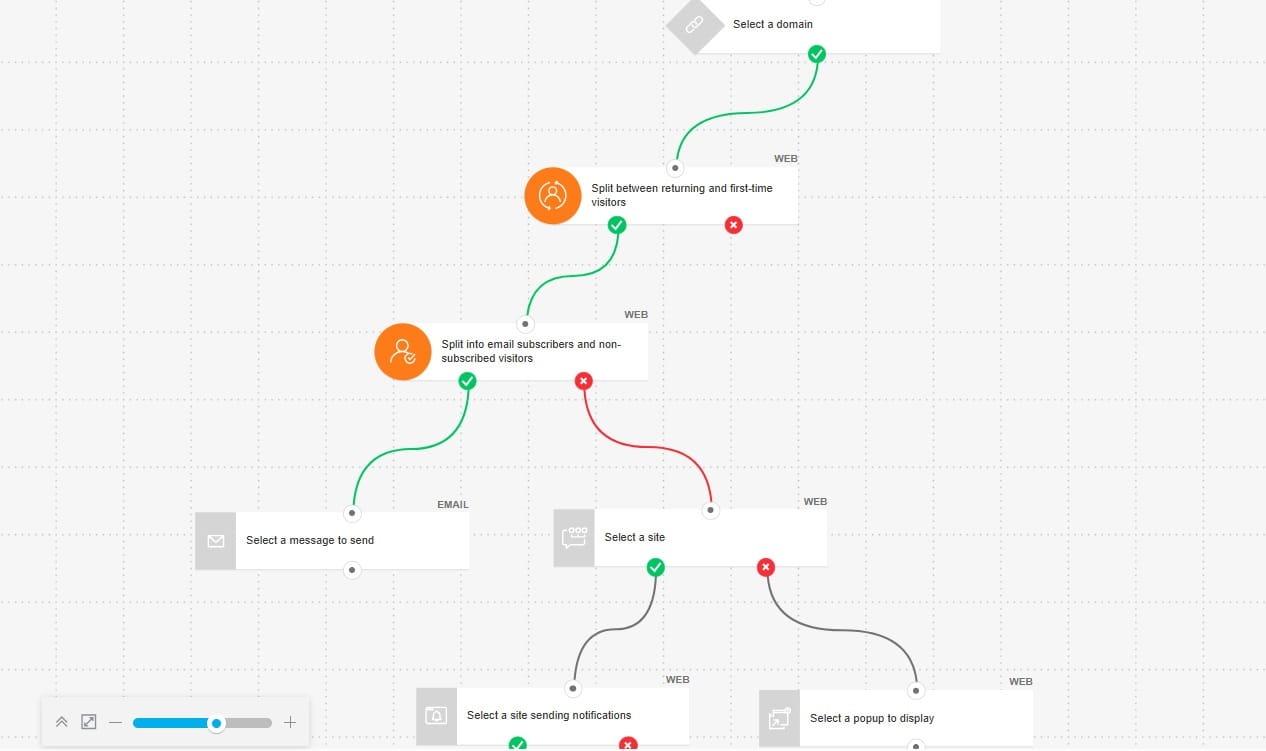
A customer lifecycle solution like GetResponse uses that data to deliver personalized customer journeys. Our automation software plugs into your ecommerce store and tracks customer behavior. You can then set up workflows that respond to critical customer actions/activities.
For example, it can track when returning shoppers come back to your store. The automation workflow engages these customers with a personalized email follow-up or pop-up.
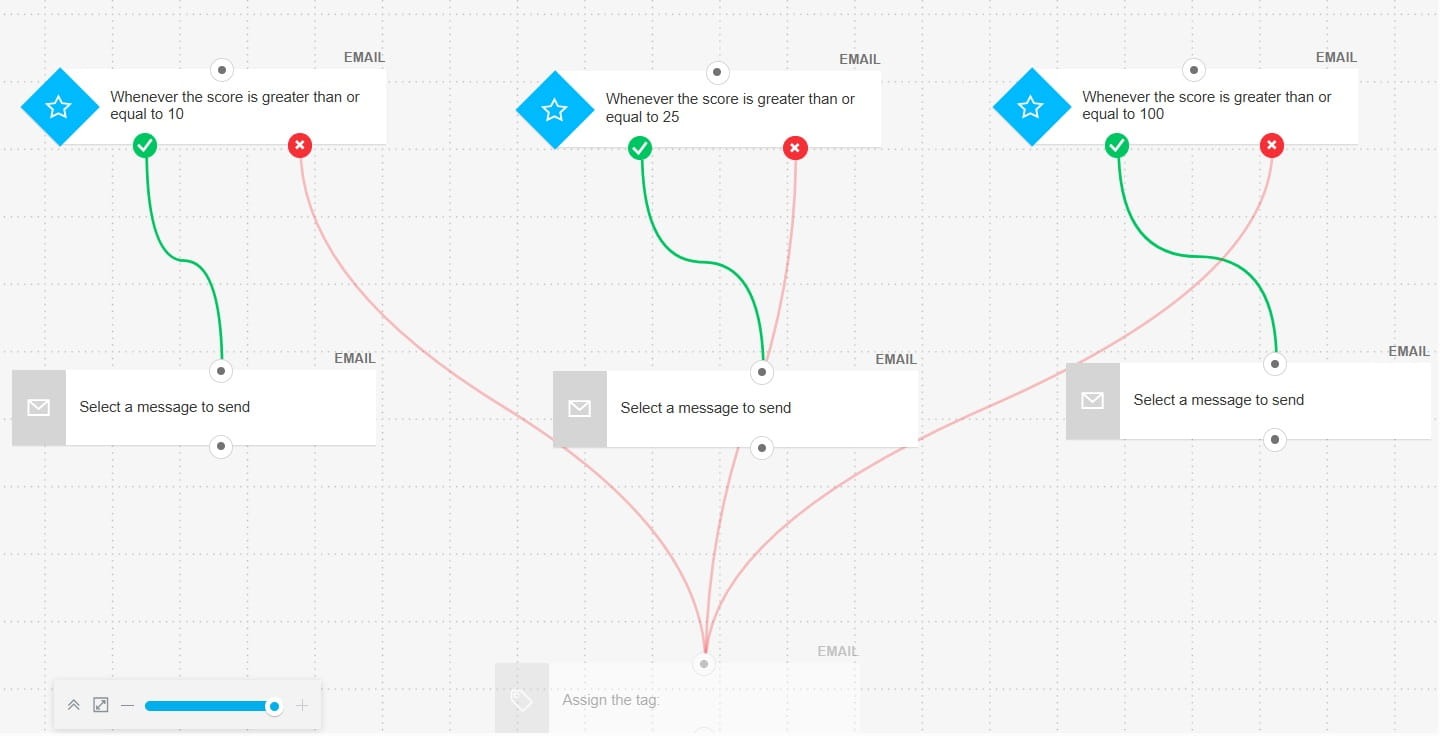
Contact scoring also allows you to track your most loyal customers and reward them with personalized offers and other VIP perks.
Not only is customer retention cheaper, but when done effectively, it can also lower customer acquisition costs in the long run.
Customer acquisition vs retention strategies
Customer acquisition leans heavily on third-party platforms and channels. It relies on paid search ads, Meta ads, affiliate partnerships, and SEO. This is part of the reason why acquisition is more expensive, since you’re forced to rent or buy visibility.
Customer retention uses owned media because customers have consented to things like email marketing, SMS, and push notifications. Brands can also use third-party marketing channels like social media to build a loyal customer base.
It’s also worth noting that retention requires cross-functional teams working together. Beyond the sales and marketing teams, customer success and product teams must be involved in delivering delightful customer experiences.
Delivering prompt customer service and incorporating customer feedback into product development are all vital to retaining customers.
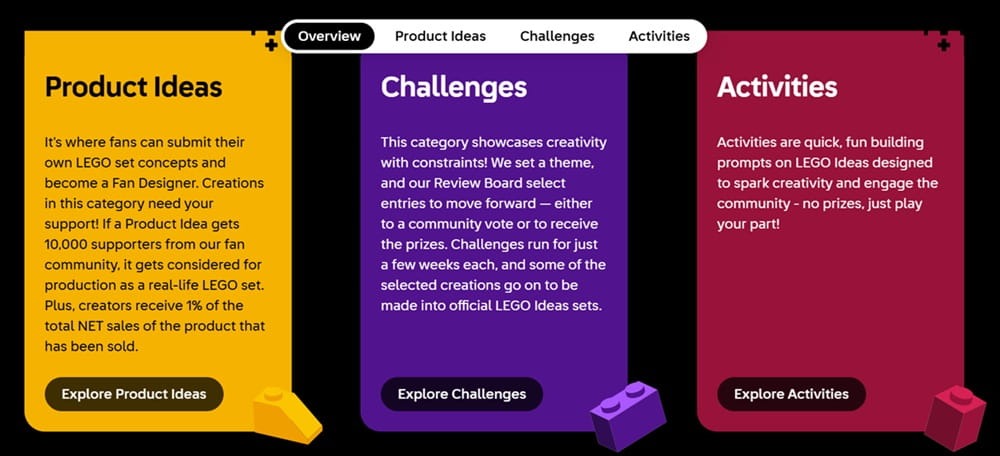
Lego Ideas is a popular example of a program where a brand collects product ideas from its customers.
Some brands also send their most loyal customers several product samples and use their feedback to determine what products go for mass production. This makes loyal customers feel valued. It increases the chances of them sticking around and recommending the brand.
Customer acquisition vs customer retention ROI
Generally speaking, retention has a higher and faster ROI than customer acquisition. Effective customer retention can also increase referral customers, which boosts ROI even further.
But customer acquisition and customer retention drive growth in different ways. As such, you should not use the same criteria to gauge their ROI.
Customer acquisition ROI comes from generating new customers and growing the customer base. The ROI tends to be lower because acquisition costs are constantly increasing due to high competition.
Promotional discounts also reduce margins. For campaigns like BFCM, brands have to wait for repeat purchases to turn a positive ROI.
That means acquisition ROI relies heavily on effective customer retention, which is why trying to balance customer acquisition and retention is so instrumental.
Customer retention ROI, on the other hand, tends to be much higher because you’ve shifted from relying on third-party channels to owned media. The ROI is also faster because there’s existing trust between you and the customers. You’re not starting from scratch with cold leads.
Customer acquisition and retention: Which one should you prioritize?
Successful businesses balance customer acquisition and retention. You need effective customer acquisition to build your customer base and increase net new revenue.
But that alone won’t be enough for sustainable business growth.
You must invest in an effective customer retention strategy to ease the pressure off acquisition and CAC. Acquisition starts the customer relationship, and retention helps you sustain it for long-term success.
GetResponse ecommerce solution can help you with both acquisition and retention. Our lead capture, email marketing, and paid ads tools are designed to help you generate demand for your products. Then, the automation solution nurtures customer relationships and moves buyers through the customer journey to build brand loyalty.
Create your free account today to automate your ideal customer journey.
Customer acquisition vs customer retention FAQs
1. What is customer retention and customer acquisition?
Customer retention and customer acquisition are both important for business growth, but they target customers at different stages of the customer journey. Customer retention focuses on nurturing existing customers to generate stable ongoing revenue from repeat purchases. Customer acquisition attracts new customers to grow your customer base and generate new revenue.
2. Are acquisition and retention the same?
Acquisition and retention are not the same, since acquisition focuses on attracting and converting cold leads into paying customers. Meanwhile, retention nurtures existing customer relationships to prevent churn and drive revenue growth from repeat buyers.
3. How much cheaper is retention than acquisition?
Retention is reportedly 5 to 25 times cheaper than acquisition. The exact figure depends on your industry and specific business model. A pet food or skincare brand may spend $20 to $40 acquiring a new customer. Then, spend only a few dollars on email marketing campaigns to send replenishment reminders and drive repeat orders.
4. Is customer retention more profitable than customer acquisition?
Yes, customer retention tends to be more profitable than customer acquisition because it engages existing customers where there is already some trust and uses owned channels, which are cheaper. Customer acquisition is less profitable due to high acquisition costs driven by market competition, increasing paid ad costs, and privacy regulations that restrict targeting.
